ESD Mat FR0601
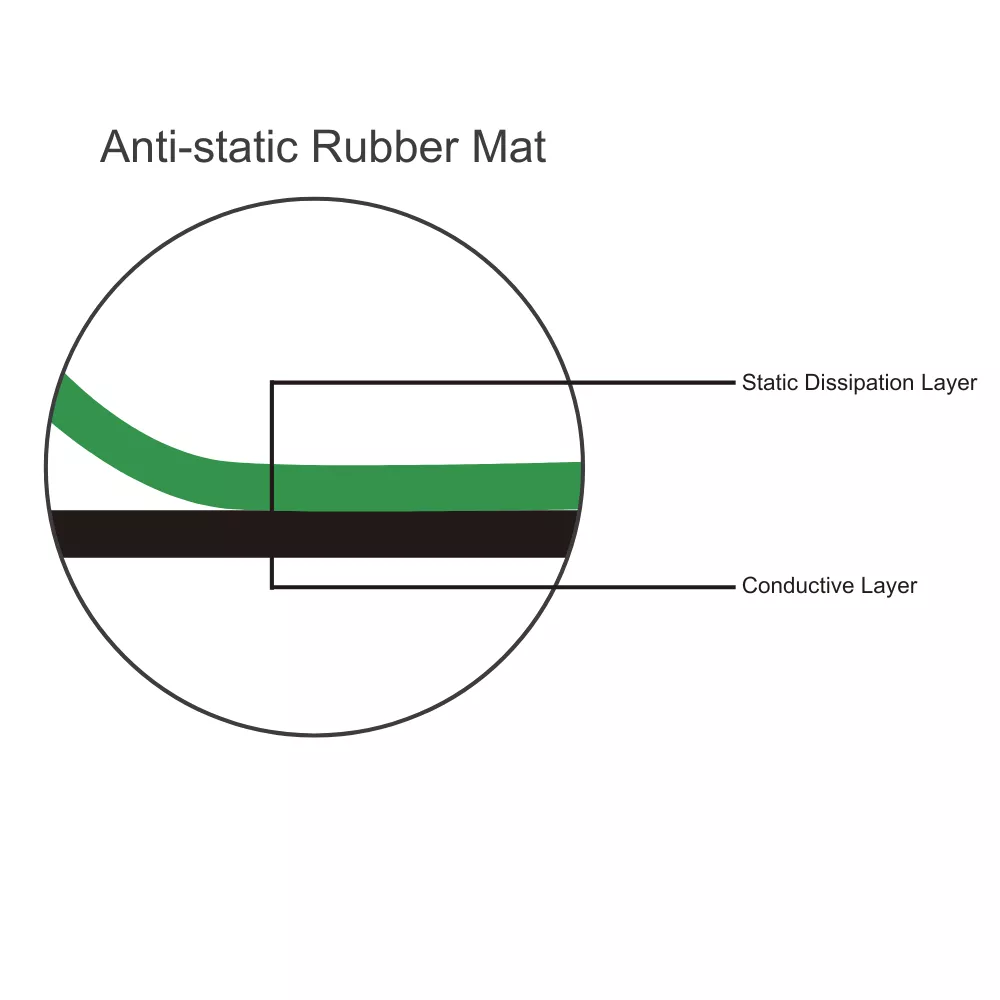
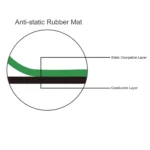
Anti-static mats are mainly made of conductive materials, electrostatic dissipative materials and synthetic
rubber through a variety of processes. Products are generally divided into two layers. The surface layer is an
electrostatic dissipation layer, and the bottom layer is a conductive layer. The feature of mat: Long service life,
Anti-acid, anti-alkali, anti-chemical solvent easy to clean.
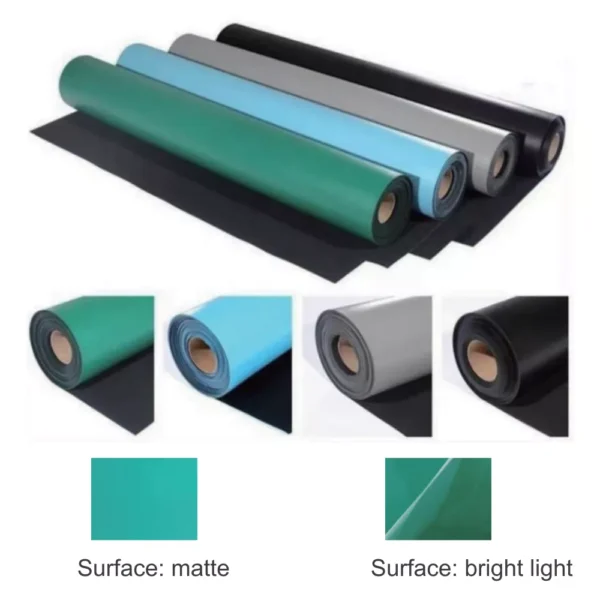
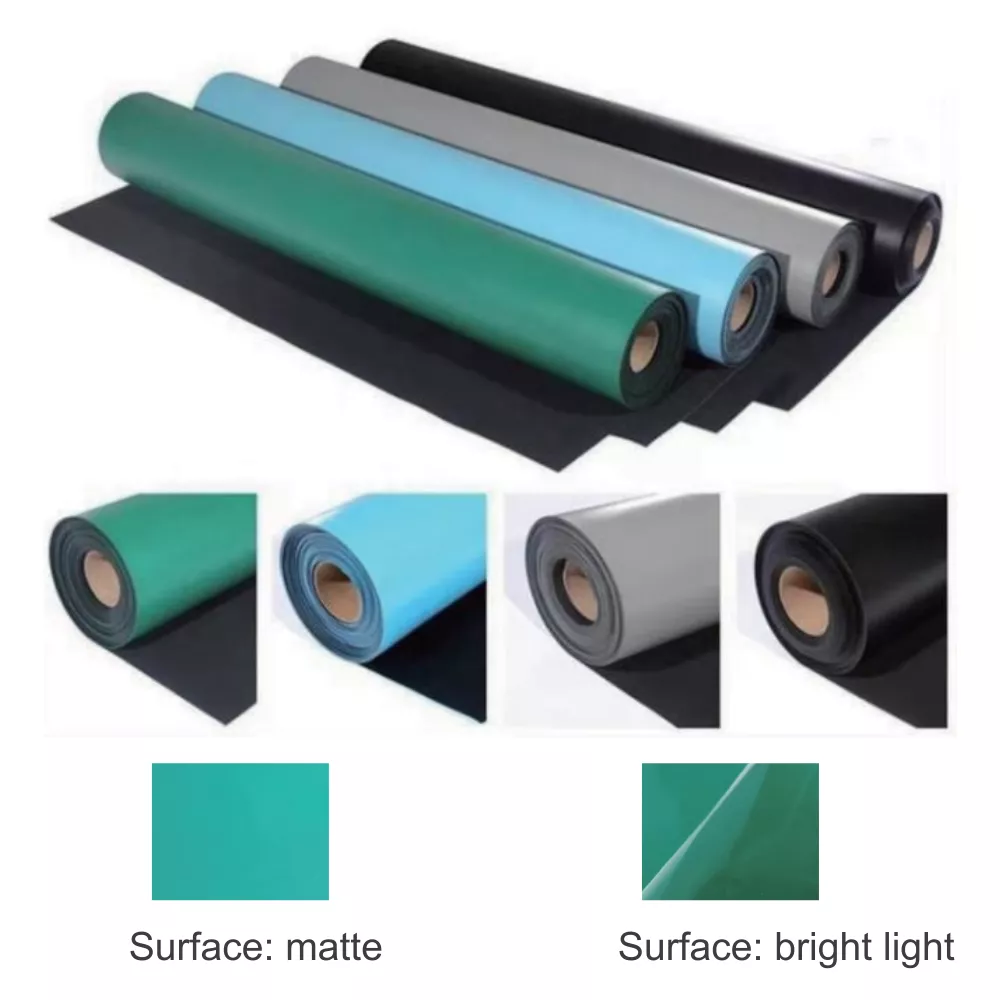
Surface layer: green, black, gray, blue. (Dull and shiny). Resistance: 10^6-10^9ohm
Bottom layer: black. Electrostatic dissipation time< 0.01S
Performance index of Dissipative Table/Floor Mat
| Dissipative Table Mat/Floor Mat | Specification | Color | ||
|---|---|---|---|---|
| Static Dissipation Layer | Surface Resistance | 10⁷–10⁹ | 1.2m × 10m × 2mm(T) 1.0m × 10m × 2mm(T) |
Green Blue Gray Black |
| Friction static potential | <100 | |||
| Conductive Layer (Black Bottom) | Surface Resistance | ≤10⁶ | ||
| Friction static potential | <60 | |||
| Static Voltage Attenuation Period | 5000 – 500V | <1.9s | ||
| Flame Retardation | GB4609-84, FV-0 (less than 10S) | |||
| Volume Resistance | 10⁷–10¹⁰ Ω·cm | |||
Physical performance index of Dissipative Table/Floor Mat
| No. | Description | Test Reference | Results |
|---|---|---|---|
| 1 | Tensile strength | GB 1040 | 3.6Mpa |
| 2 | Fracture elongation | GB 1040 | 188% |
| 3 | Tear elongation | GB/T 529 | 20.6KN/m |
| 4 | Rebound elasticity (the specimen is laminated with 6 layers of sheets) |
GB/T 1681 | 14% |
| 5 | Impact embrittlement temperature (no cut) | GB 5470 | No damage at -25°C |
| 6 | Permanent compression change rate, 70°C × 22h, compression 25% |
GB 10654 | 17.90% |
| 7 | Hot air ageing
Tensile strength change rate |
GB/T 7141 | 8.00% -3.80% 1.08% |
| Remark: Test according to national standards: GB 1040, GB/T 529, GB/T 1671, GB 5470, GB 10654 and GB/T 7141. | |||